Jerk
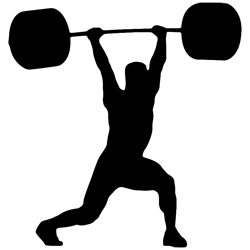
An Olympic lift where you dip and drive a bar up off your front delts, then split your feet and punch your arms locked overhead to catch it, finishing tall with the bar overhead.
- Primary muscles
- Front delts, Triceps
- Secondary
- Quads, Glutes
- Logged as
- Weight × reps
Loads from YouTube only when you press play. The video is by an independent creator.
Why do it
The jerk is the second half of the clean and jerk, and it moves far more weight overhead than a press because your legs drive the bar and you drop under it. It's for lifters learning Olympic weightlifting or anyone after explosive overhead strength. It's very technical: practice the dip, drive and split with an empty bar or a coach before adding load, and use bumper plates on a platform so you can drop a missed lift.
How to do it
Start with the bar racked on your front delts, elbows pointing forward, feet hip-width apart.
Dip a few inches by bending your knees with your torso upright.
Reverse the dip explosively to drive the bar off your shoulders, then punch your arms locked overhead as you split your feet into a shallow lunge.
Bring your front foot back, then your back foot, and stand tall with the bar overhead. The dip is short and vertical; a long or forward dip sends the bar out in front of you.
Common mistakes
Dipping too deep or too far forward
A long dip, or one where your chest tips forward, sends the bar out in front of you. Keep it short and vertical, as the steps say.
Pressing the bar out
Pushing the bar up with your arms after the drive is slow and wastes the leg drive. Drive with your legs, then punch under the bar to lock out.
Split stance too narrow
Landing with your feet in one line leaves you wobbling side to side. Keep them about hip-width apart in the split, like standing on two rails.
Recovering the back foot first
Bringing the back foot in first can pull the bar behind you. Step the front foot back first, then the back foot, and stand tall.
Sets, reps and progression
How many sets you do and how close to failure you take them depend on your goal and your week, not on the exercise. These guides cover it:
Alternatives that train the same thing
Same movement, a different angle or piece of equipment.