Power Clean
An Olympic lift from the floor: you pull the bar past your knees, extend your hips explosively and catch it on your front shoulders in a quarter squat, training your legs, hips, back and traps.
- Primary muscles
- Hamstrings, Quads, Glutes, Lower back, Traps
- Secondary
- Upper back, Front delts, Forearm flexors
- Logged as
- Weight × reps
Loads from YouTube only when you press play. The video is by an independent creator.
Why do it
The power clean is a staple for athletes who want to produce force quickly, and it's common in strength programs as a fast, lighter pull. Catching above parallel needs less mobility and squat strength than a full clean, but you have to pull the bar higher. Compared with the hang clean, you also own the pull from the floor, which takes patience until the bar passes your knees. Learn it with light weights and, if you can, a coach.
How to do it
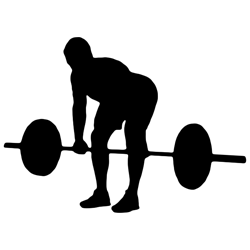
Stand with the bar over your midfoot, feet hip-width apart, and grip it just outside your legs with a flat back.
Push the floor away and lift the bar to your knees, keeping your back angle constant.
Once the bar passes your knees, extend your hips and knees explosively and shrug, letting the bar travel up close to your body.
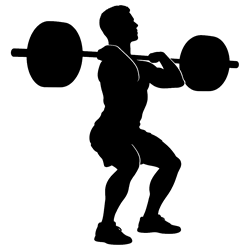
Pull yourself under into a quarter squat and catch the bar on your front shoulders with your elbows high, then stand up. Unlike a full clean, you catch it above parallel.
Common mistakes
Rushing the first pull
Yanking the bar off the floor pops your hips up early and swings the bar out front. Lift it to your knees at a steady speed with your back angle unchanged, then accelerate.
Not finishing the extension
Pulling under before your hips and knees fully open wastes the drive. Extend tall onto the balls of your feet and shrug before you drop under the bar.
Catching in a deep squat
If you keep dropping below parallel to save the bar, the weight is too heavy for a power clean. Lighten it until you can catch high in a solid quarter squat.
Catching with low elbows
A low-elbow catch drops the bar onto your wrists and pulls your chest forward. Whip your elbows forward and up so the bar lands on your front shoulders.
Sets, reps and progression
How many sets you do and how close to failure you take them depend on your goal and your week, not on the exercise. These guides cover it:
Alternatives that train the same thing
Same movement, a different angle or piece of equipment.